2026.9.1諏訪湖環境研究センターを訪問し、中綱湖の水辺生態系保全に関する懇談を行うとともに、ご提言・ご報告を行いました。
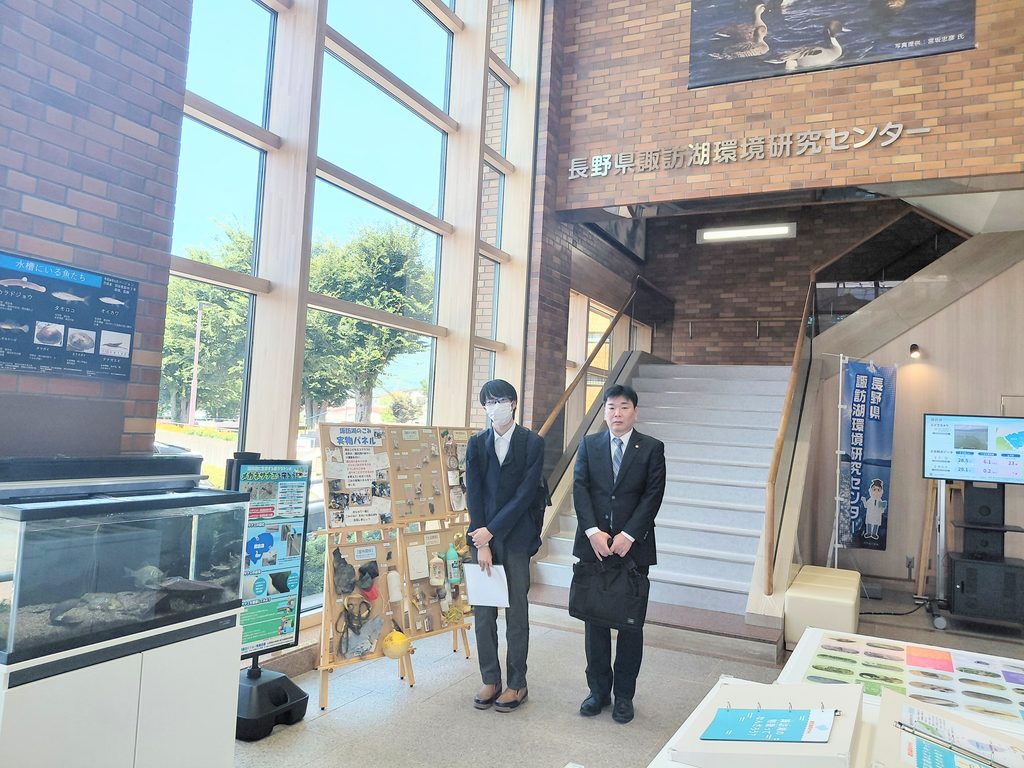
水辺環境保全のための調査、研究及び中綱湖におけるアカハライモリをはじめとする生態系の保全に向けて、長野県の諏訪湖環境研究センターにて、ご懇談の機会を賜りました。約7年間にわたる水辺生物の継続的なフィールド調査から得られた調査結果や統計解析に基づくご提言・ご報告を行いましたので、その内容を一部ご紹介します。1. 中綱湖におけるアカハライモリの個体数推定2つの統計モデルから見えたこと本調査では、2020年7月から2025年8月までの観測データを基礎に、アカハライモリの個体数推定を実施しました。今回は、2種類の統計モデルを用いてデータ解析を行い、その結果を比較しています。この結果から、現時点で「中綱湖のアカハライモリが一貫して減少している」と断定するのではないが、緩やかな個体数減少の可能性が示唆され、調査区域内における大きな年次変動や、生息場所の利用変化、移入・移出といった空間動態を含めて検証していく重要性が浮き彫りになりました。2. 現地調査から見えてきた水辺生態系の変化と外来魚の課題長期にわたる現地観察では、アカハライモリだけでなく、水辺生態系全体にかかわるいくつかの変化を認識しています。ヤゴ類・トンボ類については、7年間の現地観察において、ヤゴ類の確認数が減少しているという現場の認識があり、外来魚(ブラックバス・ブルーギル)の動向岸際で小型の幼魚が群れで泳ぐ状況が増えるなど、サイズ組成や岸際利用に変化が見られます。生態系への懸念と新たなアプローチにつき、オオクチバスやブルーギルへの対策として、ターゲットドラッグ等による水辺環境に配慮した卵床の駆除などを、ご提案しました。本調査は少人数による自主的なフィールド調査であり、中綱湖全域を網羅するものではありませんが、長年の観測から得られた「変化の兆候」を大切な問題提起として捉えています。今後も科学的な視点を大切にしながら、関係機関や専門家の皆様のご意見も踏まえつつ、中綱湖の豊かな水辺環境と生物多様性の保全に向けた活動と研究を続けて参ります。今回の訪問では、諏訪湖環境研究センターの北野先生並びに柳生先生に大変貴重なご懇談の時間を賜りましたことに深く感謝致します。また、この機会の実現にご尽力いただいた環境保護課の黒坂様にも心より感謝申し上げます。
On September 1, 2026, I visited the Lake Suwa Environmental Research Center to hold discussions regarding the conservation of the lakeside ecosystem of Lake Nakatsuna, and to present proposals and reports.
We were granted the opportunity to hold discussions at the Nagano Prefecture Lake Suwa Environmental Research Center regarding the conservation of the ecosystem—specifically targeting species such as the Japanese fire-bellied newt—and the research and study of the waterfront environment at Lake Nakatsuna. We presented findings and recommendations based on statistical analysis and data gathered from continuous field surveys of aquatic organisms spanning approximately seven years; here, we outline some of those details. 1. Population Estimation of Japanese Fire-bellied Newts in Lake Nakatsuna: Insights from Two Statistical Models. In this study, we estimated the population of Japanese fire-bellied newts based on observational data collected between July 2020 and August 2025. We analyzed the data using two different statistical models and compared the results. While the findings do not allow us to definitively conclude that the newt population in Lake Nakatsuna is in a state of consistent decline, they do suggest a potential gradual decrease. Furthermore, the results highlight the importance of further examining factors such as significant year-to-year fluctuations within the study area, changes in habitat usage, and spatial dynamics—including immigration and emigration. 2. Changes in the Waterfront Ecosystem and Issues Regarding Non-native Fish Observed During Fieldwork. Long-term field observations have revealed changes affecting not only the Japanese fire-bellied newts but the waterfront ecosystem as a whole. Regarding dragonfly larvae and adults, field observations over the seven-year period suggest a decrease in the number of larvae sighted. As for non-native fish (largemouth bass and bluegill), we have observed changes in size composition and near-shore habitat usage, such as an increase in schools of small juveniles swimming along the shoreline. Addressing concerns about the ecosystem, we proposed measures to control largemouth bass and bluegill populations—such as the targeted destruction of egg beds using methods designed to minimize environmental impact. Although this was an independent, small-scale field study that did not cover the entirety of Lake Nakatsuna, we view the “signs of change” identified through years of observation as a crucial issue worthy of attention. Moving forward, while maintaining a scientific perspective and incorporating the insights of relevant organizations and experts, we will continue our research and activities aimed at preserving the rich waterfront environment and biodiversity of Lake Nakatsuna. We would like to express our deep gratitude to Dr. Kitano and Dr. Yagyu of the Lake Suwa Environmental Research Center for the invaluable time they spent discussing these matters with us. We also extend our sincere thanks to Mr. Kurosaka of the Environmental Protection Division for his efforts in making this visit possible.